
How the Global Forex Market Shapes Currency Values and Investment Opportunities
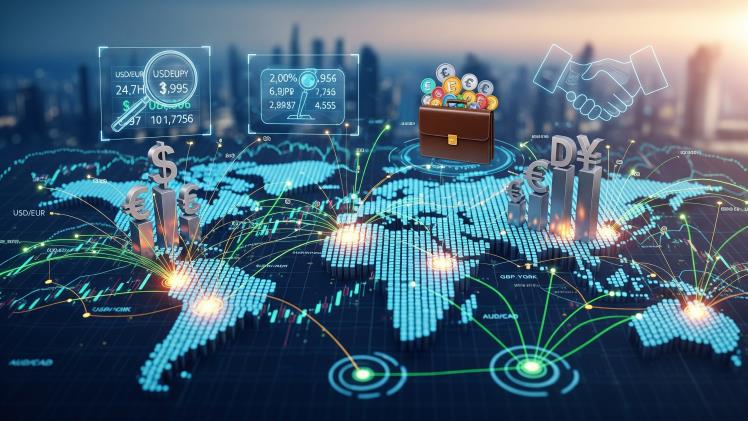 The global forex market is the largest and most liquid financial market in the world, influencing currency values, investment decisions, and international trade. With daily trading volumes reaching trillions of dollars, it serves as the backbone of global finance. Investors, businesses, and governments all rely on forex market trends to make strategic decisions, manage risks, and capitalize on opportunities. Understanding how this market operates provides insights into currency fluctuations and potential investment prospects.
Understanding Currency Value Dynamics
Currency values are determined by supply and demand in the forex market. Exchange rates fluctuate based on various economic indicators such as interest rates, inflation, employment levels, and trade balances. When a country’s economy demonstrates strong growth and stability, its currency often strengthens as investors seek to hold assets denominated in that currency. Conversely, economic uncertainty or weak growth can lead to depreciation, impacting international trade, investment returns, and purchasing power.
Influence of Global Events
The forex market is highly sensitive to global events. Geopolitical developments, trade negotiations, natural disasters, and financial crises can cause rapid shifts in currency values. For example, announcements about trade agreements can strengthen a currency if investors anticipate improved economic prospects, while political instability may trigger a sell-off. Investors and businesses closely monitor these events to anticipate market reactions and adjust strategies accordingly.
Investment Opportunities Through Currency Fluctuations
Currency fluctuations create a range of investment opportunities. Traders and investors can capitalize on these movements by buying undervalued currencies or selling overvalued ones. Investment in forex can complement broader portfolios, offering diversification and potential returns that are independent of stock or bond markets. Additionally, multinational companies often engage in currency management strategies to protect profits from exchange rate volatility, highlighting the integral role of forex in global finance.
Role of Economic Indicators
Key economic indicators play a crucial role in shaping forex market trends. Interest rate changes by central banks, inflation reports, employment statistics, and GDP growth figures directly influence investor sentiment and currency movements. Positive economic data often attracts foreign investment, strengthening the currency, while negative data can have the opposite effect. By analyzing these indicators, investors can make informed decisions about currency positions and potential investment opportunities.
Technological Advancements and Market Access
Advancements in technology have transformed how participants engage with the forex market. Sophisticated trading platforms provide real-time data, analytical tools, and automated strategies, enabling investors to react swiftly to market changes. Access to live news feeds, historical data, and technical indicators allows for strategic decision-making, risk management, and timely execution of trades. Technology has also democratized market access, allowing individual investors to participate alongside institutional players.
Impact on Global Trade and Investment
Fluctuations in currency values directly affect international trade. A strong currency makes imports cheaper and exports more expensive, while a weaker currency has the opposite effect. Businesses operating across borders must consider forex trends when pricing products, managing costs, and planning investment projects. Investors also factor in currency movements when evaluating international stocks, bonds, or real estate, as exchange rate changes can significantly affect returns.
Long-Term Considerations for Investors
Understanding long-term forex trends is essential for strategic planning. Persistent shifts in currency values may indicate broader economic changes, such as emerging market growth or shifts in global trade dynamics. By monitoring these trends, investors can identify potential opportunities, allocate resources effectively, and manage risks associated with currency exposure. Long-term analysis complements short-term trading strategies, helping investors achieve balanced and sustainable outcomes.
Conclusion
The global forex market is a powerful force that shapes currency values, impacts investment decisions, and influences international trade. Economic indicators, global events, and market sentiment all play a role in determining exchange rates, creating both opportunities and challenges for investors and businesses. By understanding these dynamics and leveraging technological tools for analysis, participants can navigate the forex market effectively, identify profitable investment opportunities, and manage risks. Awareness of forex trends is essential for anyone seeking to engage in global finance with confidence and strategic insight.